
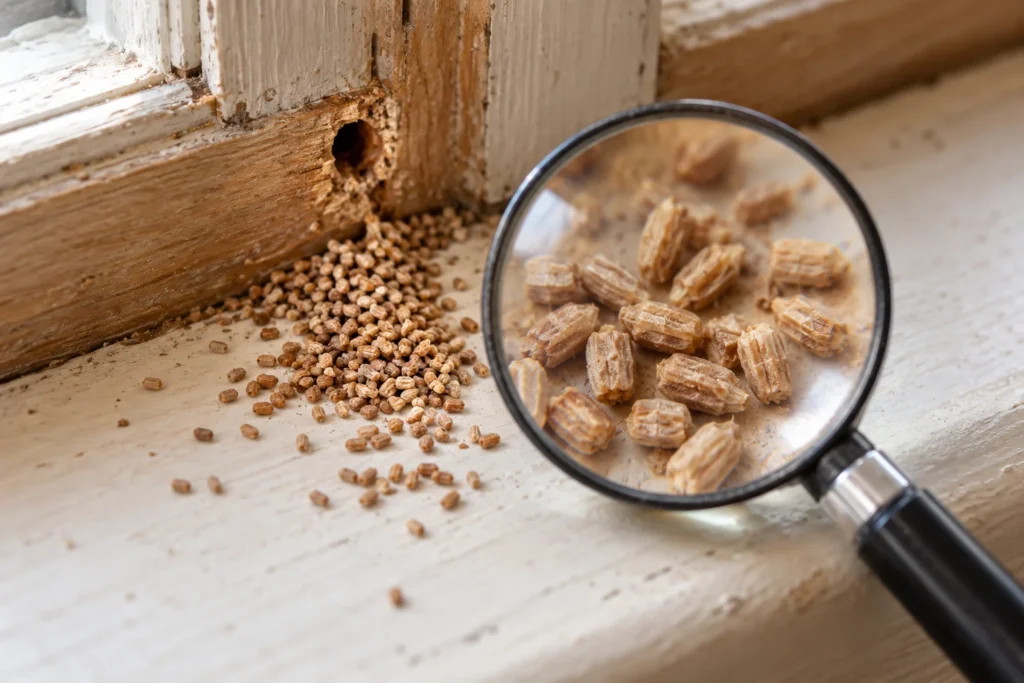
How do termites enter a house? Termites enter through concealed gaps around foundations, slab joints and service pipes, along shelter tubes over building surfaces, or through timber that connects the ground to the structure. Winged termites can also enter through openings, while drywood colonies may arrive inside infested timber or furniture. The entry route depends on the termite type and the building.
For Melbourne homeowners, understanding entry means looking beyond an open door or a visible crack. A house can appear sound while concealed connections allow termites to reach timber. The room where damage appears may be some distance from the original access point.
Our termite inspection and treatment in Melbourne helps assess evidence, accessible entry conditions and suitable management options. This guide explains the main pathways, what building features deserve attention and how to respond without disturbing suspected termite activity.
The Main Ways Termites Reach a House
Subterranean termites typically approach a building through soil and protected passages. Drywood termites have different habits: they can establish within suitable wood without a connection to the ground. An inspection needs to consider those differences before identifying a likely route.
| Possible pathway | How entry can happen | What needs assessment |
| Slab cracks and joints | Gaps can connect soil beneath the building with concealed internal areas. | Construction details, protection and evidence of activity. |
| Service penetrations | Openings around pipes or conduits can provide concealed access. | Existing collars, seals and later alterations. |
| Building surfaces | Shelter tubes can cross masonry or concrete to reach timber. | Footings, piers, wall edges and inspection zones. |
| Timber and garden bridges | Ground contact or covered edges can bypass visible inspection areas. | Deck connections, raised beds and stored materials. |
| Flight through openings | Winged reproductives may enter rooms or reach suitable timber. | Identification and whether insects entered or emerged indoors. |
| Infested timber items | Some drywood colonies can remain inside transported wooden objects. | Item history, pellets, damage and specialist identification. |
These are possible pathways, rather than a diagnosis for a particular property. A garden bed beside a wall does not prove that termites have entered. Equally, an absence of obvious tubes does not establish that every concealed part of the building is clear.
Think about the whole connection: where termites could approach, how they could cross the building boundary and which timber they could reach. That sequence makes an entry assessment more useful than simply counting cracks.
How Subterranean Termites Travel from Soil to Timber
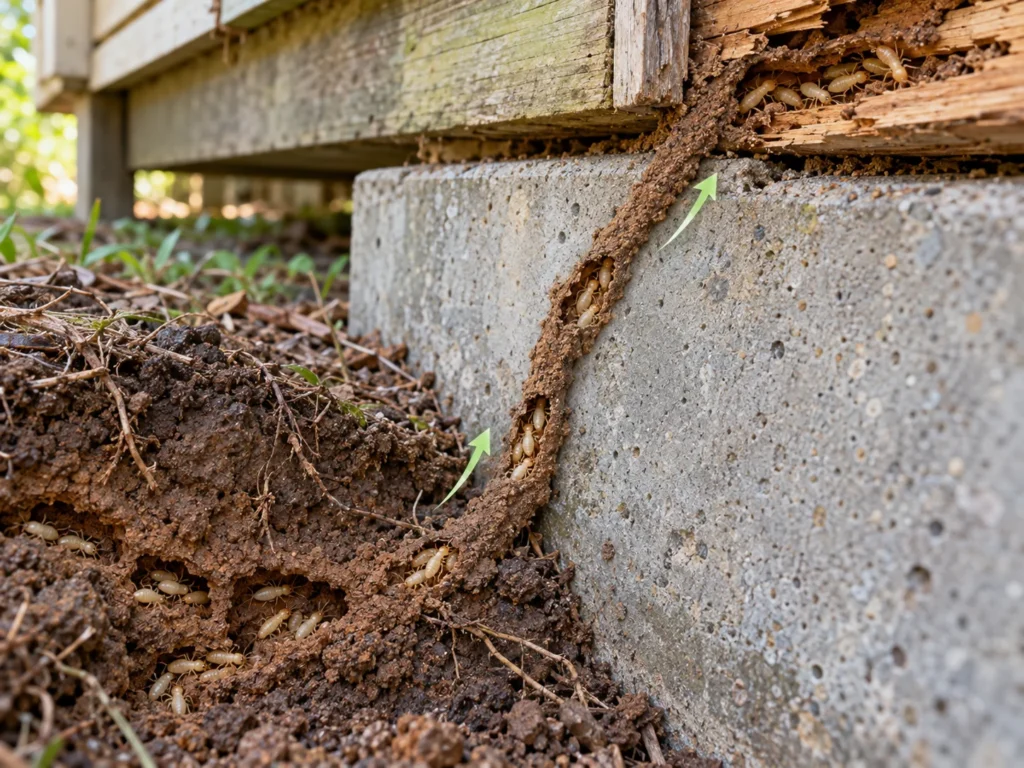
Subterranean termites forage through underground galleries and can continue above ground inside protective shelter tubes. These tubes help maintain a suitable environment while allowing termites to travel across surfaces that are not food.
A tube over a concrete footing does not mean the termites are eating concrete. It may be a covered route towards a timber floor, frame or other cellulose material. Parts of that journey can be concealed behind cladding, inside cavities or beneath the floor.
The University of California provides an educational explanation of subterranean termite behaviour and shelter tubes. The biological distinction is useful when understanding why a ground-based route can lead to damage well above ground level.
The colony may be outside the house
Finding damaged timber indoors does not establish that the main nest is directly underneath that room. A foraging network may connect the building with a nest elsewhere on the property or beyond the area you can inspect.
Trees, stumps and buried timber can be relevant to the wider assessment. However, a tree near the house is not automatically infested, and removing one suspected food source does not establish control of an existing colony.
An upper-floor finding can have a lower entry point
Termites can travel within concealed building spaces before damage becomes visible. Roof timber or an upstairs door frame can therefore be affected even when the likely approach began near ground level.
Tell the inspector where the first sign appeared, but allow the assessment to consider the wider structure. Treating that first visible location as the only access point can overlook other routes and connected activity.
Cracks, Construction Joints and Service Penetrations
A concrete slab can form part of termite management when its design, construction and associated protection are appropriate. The details around discontinuities matter as much as the broad description of the house as being on a slab.
Cracks in slabs and foundations
Small gaps may provide a route where they connect accessible areas. A crack visible on a driveway is not automatically a passage into the house, while an unseen gap beneath an internal wall can deserve investigation.
There is no useful homeowner rule that every crack below a chosen width is safe. Species, construction and the connection through the building all matter. Structural cracking also needs the appropriate building assessment, rather than a termite diagnosis based on appearance alone.
Joints between building elements
Junctions between an original house and an extension, or between adjoining concrete elements, require attention. The termite management detail at that interface may differ from the system protecting the original construction.
Keep plans and records for extensions where available. Ask whether the inspection can assess the junction and whether any concealed area requires additional access. A neat floor finish does not show what was installed beneath it.
Pipes, conduits and later alterations
Plumbing and electrical services pass through floors or walls at openings called penetrations. Protection around those openings can be important because a gap may connect concealed spaces on either side.
A later installation can change the original detail. Tell the inspector about new pipework, drainage repairs or holes cut through a slab. Avoid deciding that ordinary filler restores a termite management system; the appropriate repair depends on the installed system and construction.
Walls, Slab Edges and Suspended Floors
Different construction types create different inspection needs. A brick exterior, a raised timber floor and a concrete slab each change where an inspector looks for approach routes and evidence.
Brick and masonry walls
Termites do not need to eat bricks to affect timber within a brick house. Protected travel routes can lead past masonry into cavities containing susceptible materials.
Weep holes and ventilation openings also have building functions. Do not block them indiscriminately in an attempt to exclude termites. Ask how any proposed protection can preserve drainage, ventilation and the existing management detail.
For a rendered wall, the finish may limit visibility of the underlying edge or junction. An inspector should explain which parts can be assessed and where the finish creates a limitation. A smooth exterior is not evidence that concealed connections are absent.
Exposed slab edges
Some management arrangements rely on a visible slab edge or inspection zone to make termite travel easier to detect. Soil, paving, render or stored objects can hide that area.
The appropriate clearance depends on the building and its system. Ask what needs to stay visible at your property rather than applying a generic measurement taken from another house.
Houses on stumps or piers
Suspended floors allow inspection of accessible supports, subfloor timber and possible shelter tubes. Restricted access, stored materials and damp conditions can make that inspection more difficult.
Traditional ant caps help expose concealed travel routes; they do not make inspection unnecessary. Their condition and relationship with the surrounding construction matter. Arrange suitable access rather than crawling into a confined subfloor yourself to investigate a suspected route.
Garden Beds, Decks and Other Bridges
In termite management, a bridge is a connection that lets termites bypass a protected or visible part of the building. It may arise after construction, even when the original management arrangement was appropriate.
Raised soil and mulch beside walls
Building up soil or mulch can cover an inspection zone and create concealed access. The important question is how that material meets the building, rather than whether every garden product contains termites.
A new raised bed can change both visibility and moisture conditions. Before placing one against a house, ask how the proposal fits the termite management arrangement. Photographs of the original wall edge can help document what changed.
Attached timber structures
Decks, steps, pergolas and fences deserve attention where they connect soil, timber and the house. Ground contact or an unsuitable connection can provide access, while enclosed areas may restrict inspection.
Treated or naturally resistant timber still needs suitable design and installation. Its presence does not establish that all adjacent timber is protected. Ask the builder and termite provider how the connection will remain inspectable after the work is complete.
Stored objects and enclosed edges
Firewood, spare boards and other materials stacked against walls can conceal signs and create unwanted connections. Large installations beside a perimeter wall can also prevent an inspector from seeing an area that was previously accessible.
Before moving anything that appears to contain live termites or shelter tubes, seek advice. For routine storage without suspicious evidence, plan a location that preserves access and visibility around the building.
Moisture, Leaks and Hidden Entry Conditions
Moisture can support subterranean termite activity and influence where protected routes develop. Leaking plumbing, poor drainage, blocked gutters and persistently damp subfloor areas therefore deserve attention.
A wet patch is a condition to investigate, not proof of termites. It may come from a plumbing defect, rainwater or another building problem. The termite assessment and the repair of that moisture source answer different questions.
Tell the inspector whether dampness is recent or recurring. Useful details include when a leak began, which repairs were completed and whether the area dried afterwards. A moisture reading can guide investigation, but it cannot identify termites by itself.
Subterranean termites may maintain protected moisture conditions away from obvious surface wetness. A dry living room therefore does not rule out activity inside concealed timber or a route beneath the house.
Drywood termites have different moisture requirements and can live within suitable wood without ground contact. Fixing a leaking tap is sensible property care, but it should not be presented as a universal solution for every termite group.
Coordinate drainage or plumbing repairs with termite advice when work will disturb soil beside the building. Repairing the original defect should also preserve or appropriately restore any management detail affected by the work.
Can Flying Termites Enter Through Windows or the Roof?
Winged reproductive termites, called alates, can enter through openings during dispersal flights. They are different from the wingless foraging workers travelling through subterranean galleries and shelter tubes.
Finding a few flying insects near an open window does not prove that timber inside the house is infested. They may have arrived from outside, and flying ants can be mistaken for termites. Identification and the circumstances of the sighting matter.
Insects that entered versus insects that emerged
Record where the insects were first seen and whether doors or windows were open. If they appear to emerge from a wall, floor or timber component, report that observation without opening the area yourself.
Repeated indoor sightings, shed wings and other evidence warrant an assessment. The location of wings alone does not reliably establish the original entry point or the age of an infestation.
Above-ground timber and drywood termites
Drywood reproductives can reach suitable wood by flight and establish within it. This is a separate pathway from a subterranean approach through the soil.
That distinction matters for roof spaces and timber items, but it does not mean that every roof insect is a drywood termite. Drywood termites are occasional introductions in Victoria, so the type should be established rather than assumed from generic advice for another region.
Screens and appropriate building maintenance can reduce incidental insect entry. They should be considered alongside the property assessment, because keeping flying insects out of a window does not address a subterranean route beneath the building.
Can Furniture, Firewood or Building Timber Bring Termites Inside?
Some drywood termites can remain within infested timber products during transport. A wooden item may therefore bring an existing colony into a building, even when the house has a system designed for subterranean termites.
Furniture history is useful information. Tell the inspector where the item came from, when it arrived and whether pellets or damaged timber were noticed before or after it was moved.
Small dry pellet deposits can support a drywood investigation, but other debris may look similar. Pellets alone do not confirm the exact species, current activity or the extent of damage. Keep the original location available for assessment.
Finding termites in outdoor firewood is a different situation. It does not automatically mean a self-contained drywood colony has been carried indoors. Identify the termites and their circumstances before drawing conclusions about transport or establishment.
Avoid carrying a suspicious item through several rooms or taking it to another property for a second opinion without advice. The provider may need photographs, a directed sample and the item’s original position to understand the evidence.
For building timber, retain purchase and treatment information where available. If suspicious evidence appears during installation, pause work around that material and arrange identification before concealing it behind finishes.
Why Barriers and New Construction Still Need Inspection
A termite management system has a defined scope. It may address concealed subterranean entry, help expose travel routes or support treatment and monitoring. It does not establish that every termite pathway and timber item is permanently protected.
| Common assumption | More accurate interpretation | Practical question |
| A concrete house cannot have termites. | Timber and other susceptible materials may remain accessible beyond the concrete. | Which junctions and concealed areas can be inspected? |
| A steel frame protects everything. | The frame material does not describe all timber, fittings or furniture. | What other materials and routes remain relevant? |
| Ant caps eliminate entry. | They help expose concealed travel and still need inspection. | Are the supports and inspection areas visible? |
| A barrier means permanent exclusion. | Performance depends on the system, condition and maintenance. | What records, inspections and servicing are required? |
| Filling the visible hole solves the colony. | A surface repair does not establish control of connected activity. | What evidence and management are needed before repair? |
Soil treatment and reticulation
Chemical soil barriers form part of suitable subterranean management plans. Construction, access, treatment continuity and later soil disturbance influence their relevance. Ask which areas are covered and what maintenance applies.
Termite reticulation systems distribute an appropriate treatment through installed pipework when the system and site allow it. Having a charging point does not establish that the system is current or covers every part of an extension.
Baiting and ongoing monitoring
Termite baiting and monitoring systems may be appropriate for an identified subterranean termite problem. Stations need management and follow-up; they are not a solid physical wall around the house.
These soil-based arrangements should not be assumed to control a drywood colony already inside furniture or structural timber. Request an explanation of how the proposed approach matches the identified termites and findings.
Warning Signs and What to Do Next
Possible signs include earthen tubes, damaged timber, shed wings or pellets associated with a wooden item. Doors that stick and blistered finishes can also have other causes. An inspection needs to distinguish termite evidence from moisture damage and ordinary building movement.
Preserve the scene when suspicious evidence appears. A useful first response is:
- Photograph the evidence closely and include a wider view of its location.
- Record the date, room and building surface or item involved.
- Leave suspected shelter tubes, galleries and damaged timber undisturbed.
- Avoid applying household insect sprays to suspected termite activity.
- Share previous inspection, treatment, renovation and moisture records.
- Arrange identification and an inspection suited to the finding.
Our termite detection and assessment service can help assess accessible evidence and determine which further investigations are appropriate. Ask what the inspection can establish about likely entry, live activity and affected areas.
The entry route may remain uncertain where finishes, stored items or restricted access prevent inspection. A useful report should identify those limitations and explain any proposed additional access, rather than describe unseen areas as confirmed clear.
If a timber component appears unstable, keep people away and arrange appropriate building advice. Pest management and assessment of structural condition are separate parts of responding to the finding.
Reducing Entry Risk and Planning Renovations
Prevention works best when the property remains inspectable and its management arrangement is understood. Start with the building records, current conditions and recommendations from the last inspection.
Practical maintenance priorities include:
- Keep the building’s required inspection zones visible and accessible.
- Repair plumbing, roof leaks and drainage problems appropriately.
- Maintain subfloor ventilation and avoid obstructing vents.
- Keep routine timber storage away from direct contact with the building and soil.
- Review deck connections, raised beds and new service penetrations before work.
- Retain system records and follow the recommended inspection and servicing schedule.
Before excavation or landscaping beside the house, establish which management details may be affected. Include that discussion in the work scope so a repair does not finish with a concealed or disturbed protection area.
Our annual termite inspections in Melbourne provide a way to review accessible evidence and changes over time. Ask whether the property findings or system requirements justify additional monitoring between routine inspections.
If you are buying a home, a pre-purchase pest inspection in Melbourne can assess accessible timber-pest concerns before the purchase decision. Request information about entry conditions, existing systems and inspection limitations, alongside the appropriate building assessment.
For renovations, document relevant junctions and management work before they are covered. Confirm who will address any changes to protection and arrange a review when the work affects an existing system.
Frequently Asked Questions
How do termites enter a house without obvious holes?
They may use concealed gaps at slab joints, service penetrations or wall interfaces, or build protected tubes towards timber. Much of the route can remain hidden beneath floors or behind finishes. A visible hole in the room where damage appears is not required for entry to have occurred.
Can termites eat through concrete or bricks?
Concrete and bricks are not their cellulose food source. Termites can travel over surfaces inside shelter tubes or use connected gaps and junctions to reach timber. A concrete slab or masonry exterior needs to be considered with its construction details and the rest of the building.
Can termites enter a brick veneer house?
Yes. A brick exterior can surround timber framing and fittings. Routes may be concealed at foundations, wall cavities or other interfaces. The brickwork alone does not show whether the underlying termite management arrangement is intact or whether accessible timber-pest evidence is present.
Does a gap around a pipe mean termites are inside?
No. It may be an entry condition worth assessing, but a gap alone is not proof of an infestation. An inspector considers the opening, construction, protection and evidence. Have later alterations reviewed rather than assuming the original management system covers a new penetration.
Can termites get into the roof from the ground?
Subterranean termites can reach upper building areas through concealed routes. Roof damage therefore does not necessarily mean insects first entered through the roof. Flight is a different pathway, particularly relevant to drywood termites, and identification helps determine which explanation fits the findings.
Do flying termites inside always mean an infestation?
No. Winged termites may enter from outside, and flying ants can be mistaken for them. Insects apparently emerging from building materials or repeated indoor sightings require investigation. Record the circumstances and arrange identification instead of treating the presence of wings alone as a complete diagnosis.
Can an old piece of furniture introduce termites?
An infested timber item can carry some drywood termites. Its age alone does not establish infestation, and loose debris may have other causes. Preserve the item’s location, record its history and obtain identification before moving it between properties or deciding on treatment.
Will sealing cracks keep all termites out?
Appropriate repairs can address some entry conditions, but sealing visible gaps does not establish control of existing activity or every concealed route. Repairs must suit the building and any installed system. Obtain advice before covering evidence or assuming ordinary sealant restores specialised protection.
Can a new house still have termite entry risks?
Yes. The management system has a particular scope and maintenance requirements. Landscaping, extensions or new service openings can change the original arrangement. Keep the installation records and review later work so inspection areas remain accessible and affected protection details are addressed.
Should I break a mud tube to check for live termites?
Leave suspected tubes undisturbed and arrange an assessment. Photograph the location without opening the route or applying insect spray. Disturbing the evidence can make investigation and treatment planning harder, while the absence of visible insects in a disturbed area does not establish that the property is clear.
Arrange a Termite Entry Assessment in Melbourne
Total Care Pest Control provides termite inspection, detection and treatment services for Melbourne homes and businesses. Based in Greenvale, Victoria 3059, our team can discuss suspicious evidence, possible access conditions and the next appropriate assessment.
When contacting us, explain what you have seen and where it appeared. Mention recent landscaping, extensions, plumbing work, leaks or timber items brought into the property. Earlier reports and treatment records help put new observations in context.
Call 0480 210 636 or email accounts@totalcarepest.com.au to discuss your property. Request a clear explanation of the inspection scope, findings, management options and follow-up so you understand how the proposed work addresses your home’s termite risks.