
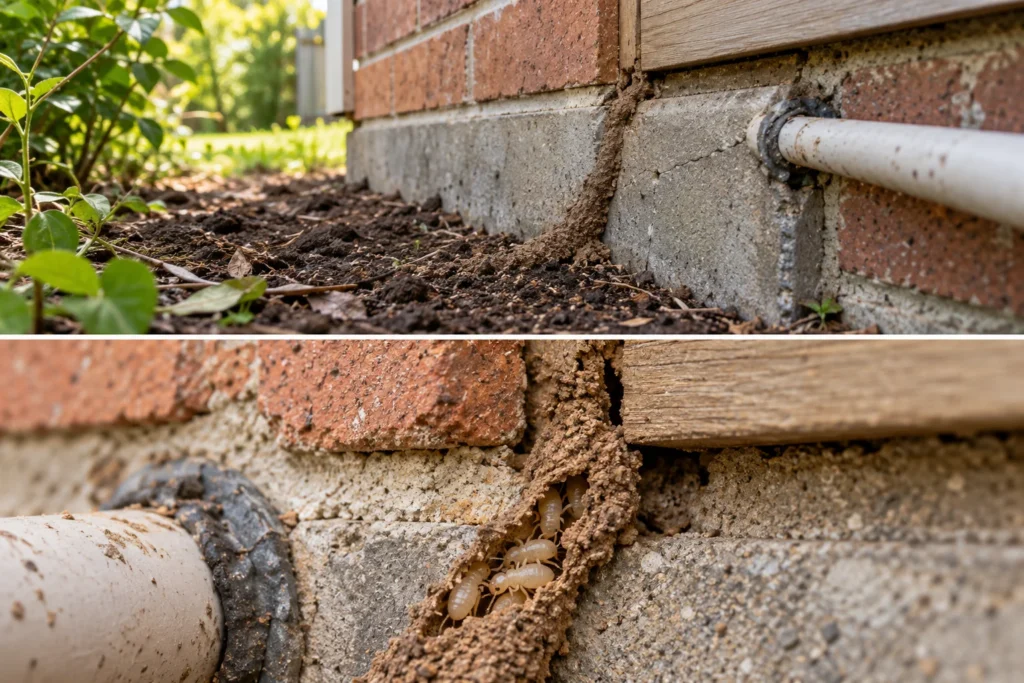
Termite droppings identification usually focuses on the tiny, dry faecal pellets associated with drywood termites. Under magnification, these pellets can show an elongated shape with six flattened sides or characteristic ridges. Colour can vary, and a pile alone cannot establish the termite species, whether activity is current or how much timber is affected. Preserve the evidence and arrange identification before selecting treatment.
The first clue might be a small deposit beneath a window frame, on a cupboard shelf or below wooden furniture. Similar-looking material can come from timber borers, ants, cockroaches or ordinary building work. The location and surrounding evidence matter alongside the appearance of an individual grain.
This guide explains the features worth checking, common lookalikes and what an assessment should clarify. Our termite inspection and treatment in Melbourne service connects reported evidence with a property assessment and advice suited to the findings.
What Termite Droppings Are and Why Frass Matters
Frass is a term used for insect waste and, depending on the insect, material associated with feeding or excavation. In a drywood termite discussion, it commonly refers to the faecal pellets expelled from galleries inside wood. The term is also used for debris produced by other timber pests.
Drywood termites can push pellets through small openings often called kick-out holes. The material may collect underneath an affected piece of timber. This can make the waste visible even when the termites themselves remain concealed.
However, a description such as “sawdust near a window” is not a diagnosis. A pellet deposit, fine boring powder and irregular wood fragments have different possible sources. Their appearance needs to be assessed with the timber, any openings and other pest evidence.
The useful goal is to identify the material and understand its connection to the property. You can provide photographs and the location without deciding the pest yourself. An inspector can then explain what is confirmed and what requires further investigation.
What Drywood Termite Droppings Look Like
Recognising a possible pellet pile helps you know what to report. It does not replace identification, especially when the material is tiny, mixed with other debris or visible only in a photograph.
| Feature | Typical observation | Important limitation |
| Shape | Elongated pellets with flattened sides or longitudinal ridges | Detail generally needs magnification; shape alone is insufficient. |
| Consistency | Individual dry grains rather than a smooth powder | Other insects can produce granular material too. |
| Size pattern | Relatively similar-sized pellets within a deposit | Overlap with other debris prevents a size-only diagnosis. |
| Colour | Light, dark or mixed-colour material | Colour cannot establish species, age or current activity. |
| Distribution | A small pile or scattered grains below a possible source | The timber above and surrounding evidence need examination. |
Shape and surface detail
Drywood termite pellets can have six flattened surfaces or characteristic ridges along an elongated body. These details are more useful than the general impression of brown dust, but they may be difficult to see without suitable magnification.
The University of California’s drywood termite identification guidance explains the pellet features and the limits of inferring activity from them. Photographs can help an initial assessment, while confirmation may require an actual sample or inspection.
Individual grains rather than fine powder
A typical drywood pellet deposit is granular. From a normal viewing distance, however, it may look like coarse dust or a small patch of debris. Lighting, distance and mixed material can conceal the individual grains.
Fine powder can suggest a different timber pest, but not every beetle produces the same material. Do not use “powder” or “grains” as the sole decision. Record the appearance and let the assessment consider the possible sources together.
Size and consistency within a pile
Drywood termite pellets are tiny and can be relatively uniform within a deposit. This consistency can support identification, especially when the pellet shape is visible. It is more useful than comparing the whole pile with a household ingredient.
An approximate scale in a photograph can help show the size. Place a ruler nearby without disrupting the deposit or suspected opening. Do not assume that one small grain confirms termites, because other insect waste and household material can overlap in appearance.
Colour varies and does not date the evidence
Pellets can range from light to dark, and a deposit may contain different colours. This variation makes rules such as “dark means active” or “pale means old” unreliable. Colour alone also cannot identify the termite species.
Look for a pattern of observations instead: where material appears, whether it has been recorded before and whether there is supporting evidence nearby. Those details are more useful than trying to date a deposit from its shade.
Piles and scattered deposits
Pellets pushed from a low opening may collect in a small pile. Material falling from farther above can scatter across a surface, making the source less obvious. A neat mound is therefore not the only possible presentation.
Photograph the deposit and the area above it. The inspector may need to consider a frame, shelf, timber lining or piece of furniture nearby. Leave the material and suspected source in place rather than opening the timber to follow it.
Drywood Subterranean and Dampwood Termite Evidence
Different termite groups can leave different evidence. A guide based only on loose pellets would miss some termite problems and could lead to an unsuitable treatment recommendation.
Drywood termites
Drywood termites live within affected wood and do not need the same soil connection as subterranean termites. Their expelled pellets can be an important external clue while the insects and feeding galleries remain concealed.
Correctly identified pellets support concern about drywood termite evidence, but the species and current status still need assessment. A furniture deposit and a deposit below structural timber may require different investigation and management arrangements.
Subterranean termites
Subterranean termite evidence is more often investigated through shelter tubes, earthen workings and affected timber. Their galleries can have muddy or caked material rather than the relatively clean workings associated with drywood termites.
The absence of a dry pellet pile does not show that a Melbourne property is clear of termites. Report suspected earthen tracks, damaged timber or other evidence even when you have never seen loose droppings. Identification should follow the actual findings.
Dampwood termites
Some dampwood termites also produce faecal pellets, although their appearance can differ from the distinctive ridged drywood pellets. Moist conditions may alter how material remains within affected wood.
This is another reason to consider moisture, timber condition and insect identification together. A damp piece of timber with debris should not automatically be labelled a drywood termite problem, and a leak needs attention regardless of the final pest diagnosis.
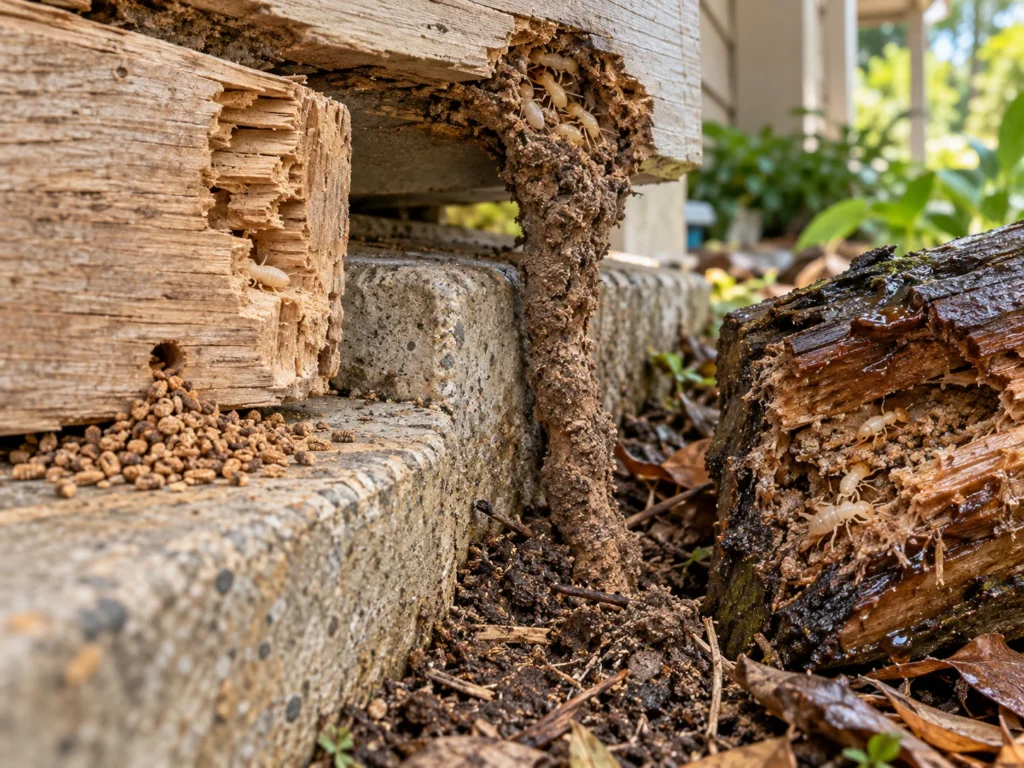
Termite Droppings Versus Sawdust and Other Debris
Several materials can look similar when they are scattered on a floor or shelf. The following comparison provides clues for discussion with an inspector, rather than a set of definitive home tests.
| Possible material | What may distinguish it | What to investigate |
| Drywood termite pellets | Relatively uniform grains with characteristic surfaces under magnification | Possible ejection openings, affected timber and termite evidence. |
| Timber-borer frass | Fine powder in some groups; coarser or pellet-like material in others | Exit holes, beetle identification and the timber involved. |
| Ant excavation debris | Irregular wood fragments or mixed material associated with nesting | Ant activity, nesting areas and the source of the debris. |
| Cockroach droppings | Can resemble pellets but may vary more in shape and size | Insect identification and surrounding activity. |
| Sawing or sanding debris | A connection to recent timber work and its location | Whether work explains the deposit or has exposed older pest evidence. |
| Other household debris | Dust, material from belongings or building finishes | The actual source and whether a repeated pattern is present. |
Powderpost beetles can produce very fine boring dust, while other beetle groups leave material with a different texture. A broad claim that all borer waste is fine powder would be misleading. The openings and timber need to be examined alongside the debris.
Ants can leave excavation material near nesting areas, and cockroach waste can also be mistaken for termite pellets. Even a roughly similar pellet shape is not sufficient on its own. The combined features and supporting insect evidence matter.
Renovation work adds another complication. Fresh sanding dust may explain a deposit, but movement can also release older material from affected wood. Report what work occurred and when, rather than assuming that all newly visible debris was newly produced.
Where Termite Pellets May Be Found
Possible deposits may be noticed below window frames, near skirting boards, beneath timber furniture or on shelves and other surfaces. The material can fall from an opening above, so the surface receiving it is not necessarily the original source.
Look at the context without dismantling it. A photograph of the entire wall or furniture area can be more useful than a close-up that excludes the timber above. Note nearby fixtures, any visible opening and the position of the deposit.
In wardrobes or cupboards, stored belongings may hide the evidence until items are moved. Explain whether the grains were on a shelf, underneath an object or associated with one particular piece of timber. The relationship helps the inspector plan the assessment.
At a business or shared property, evidence might be inside one occupied area while relevant timber or access sits elsewhere. Notify the person responsible for the premises and arrange access to the appropriate locations. Avoid relocating suspected affected items before seeking advice.
Do not enter a roof void, confined subfloor or unstable area just to trace a deposit. Provide the accessible observations and let the provider arrange suitable inspection access. The source can need investigation without turning an ordinary observation into a DIY building inspection.
Does a Pellet Pile Mean Termites Are Still Active
Pellets can remain after an earlier infestation or treatment. Material may also be released by movement or vibration. A deposit therefore records termite-related evidence only once it is properly identified; it does not automatically establish current activity.
Repeated material appearing at the same location deserves reassessment. The inspector needs to consider whether it reflects continuing production, displaced older pellets or another source. The amount in a pile cannot reliably show how many termites are present or how much timber has been damaged.
Keep the date and location of each observation, together with photographs and previous inspection records. If the area was recently renovated, moved or treated, include those details. They help distinguish a change in visible evidence from an assumed change in pest activity.
After evidence has been identified, the provider may recommend a documented cleaning and monitoring arrangement. Follow that plan rather than treating a freshly cleared surface as a conclusive experiment. The findings need to be interpreted with the original assessment.
Existing damage and live activity are also separate questions. Timber may remain weakened after the pest has been managed. Ask whether a building professional needs to assess affected components, even when the current termite findings are reassuring.
What to Do When You Find Suspected Termite Droppings
Preserve the context before cleaning or applying a product. Your observations should help identify the debris and its source, without disturbing suspected workings or opening affected timber.
- Photograph the deposit closely and include a wider view of its location.
- Record the date, room and surface where the material appeared.
- Note recent building work, furniture movement or previous treatment.
- Leave suspected openings, earthen workings and damaged timber undisturbed.
- Ask the provider whether a sample should be retained and how to collect it.
- Arrange identification and an inspection suited to the findings.
Tell the provider if the deposit has already been cleaned or sprayed. Explain where it was and whether photographs remain available. A changed scene can still be assessed, but the inspector should know what has happened.
If sampling is requested, follow the instructions for a small labelled sample rather than removing timber or relocating furniture. The provider may need both the material and the original location. Do not transport suspected affected items between properties to seek a second opinion without advice.
For a rental, business or shared building, coordinate access with the relevant owner or manager. If an unstable timber component is also visible, keep people away from it and seek building advice alongside the pest assessment.
How a Professional Identifies the Debris
Identification begins with the material and its context. The inspector may examine pellet shape, size consistency and surface detail using suitable magnification. They also consider the timber, nearby openings and any insects or other evidence present.
Our termite detection and assessment service helps establish which findings are supported and whether additional investigation is needed. Explain whether the deposit is recurring, associated with furniture or linked to a specific building surface.
A photograph may suggest a likely source, but limited detail can prevent confirmation. Even a clear pellet identification does not necessarily establish the exact species. Identifiable termites, including appropriate castes, and specialist examination may be needed for that question.
The inspection should explain accessible areas checked, evidence observed and limitations. Concealed timber can remain unexamined without separately agreed access. Ask what the report establishes about activity, what remains uncertain and which next steps are recommended.
If another pest is responsible, the management plan should change accordingly. Borer evidence, ant nesting debris and termite pellets do not call for the same response. Request an explanation of how identification connects to the proposed work.
Why Treatment Must Match the Termite Type
The appearance of suspected droppings does not select the treatment method. Identification, accessible activity, affected timber and construction all influence the plan. A system designed for one termite group should not be assumed to control another.
When drywood termites are confirmed
Drywood termites can live within wood without maintaining a soil route. Management needs to address the affected timber and infestation, with options assessed according to their extent and accessibility.
Ask which suitable approaches are available and whether specialist input is needed. Localised work and broader specialist treatments have different scopes and limitations. Do not assume that a spray on visible pellets reaches termites concealed inside the wood.
When subterranean systems are relevant
Termite baiting and monitoring systems may form part of an appropriate subterranean termite plan. Their use needs to follow the pest, system and findings. A site baiting program is not automatically a solution for a drywood colony inside furniture or building timber.
Chemical soil barriers involve suitable treatment zones associated with soil-based termite management. An existing barrier does not, by itself, rule out a different termite group or identify loose pellets.
Termite reticulation systems distribute an appropriate treatment through installed pipework when the system and site allow it. Their presence is useful history for the inspector, but it should not replace assessment of a new deposit.
Reporting and follow-up
Request a written explanation of the target pest, treatment scope, preparation, precautions and follow-up. Ask how progress will be assessed and whether cleaning or monitoring instructions apply to the pellet location.
Pest management does not restore timber that has already lost strength. Coordinate repair decisions with a suitable building professional and the treatment provider. Keep both the findings and completed work recorded so future observations can be interpreted accurately.
Buying Renovating or Moving Timber Furniture
Pellets noticed during a property inspection or furniture move deserve the same identification as material found during everyday cleaning. Recent movement can expose previously hidden evidence, and the apparent location may change when an item is repositioned.
If you are buying a property, a pre-purchase pest inspection in Melbourne can assess accessible timber-pest concerns. Report the deposit and ask what the inspection can establish, including any access restrictions. Structural condition should also be considered through the appropriate building assessment.
For furniture, describe where the item came from, when it arrived and whether material appeared underneath it before or after movement. Drywood termites can be associated with timber items, so that history can be useful without establishing a diagnosis by itself.
During renovation, pause work around suspected termite evidence until the assessment is arranged. Tell the inspector which finishes or timber have already been removed. Opening more material can disrupt the evidence and complicate the assessment of its original position.
Agree on the sequence of inspection, pest management and any repair or replacement. Avoid covering the area simply because a deposit has been swept away. The underlying cause needs to be understood before the evidence disappears behind new finishes.
Prevention Inspection and Monitoring After Identification
After identification, property care and follow-up should match the actual pest and findings. General maintenance remains useful, but it cannot establish that a drywood infestation or another timber-pest problem has been resolved.
- Retain the inspection report, treatment record and dated photographs.
- Follow the provider’s instructions for cleaning and monitoring the location.
- Investigate leaks, dampness and deteriorating timber identified in the assessment.
- Keep requested inspection areas accessible and avoid concealing building edges.
- Complete recommended property repairs in coordination with the management plan.
- Report recurring deposits or other new evidence between scheduled visits.
Our annual termite inspections in Melbourne provide a way to review accessible evidence and property changes. Ask whether the findings or an installed system require additional monitoring or a different inspection arrangement.
Repairs to moisture problems support property condition, but drywood termites do not require the same soil moisture connection as subterranean termites. Fixing a leak should therefore not be treated as confirmation that a drywood problem is controlled.
Use the report to keep responsibilities clear. An occupant may record new material, a manager may arrange access and a trade may repair damaged components. A documented plan helps the next assessment connect fresh observations with earlier findings.
Frequently Asked Questions
What do termite droppings look like
The familiar drywood termite droppings are tiny, dry pellets that can show an elongated shape and six flattened surfaces or ridges under magnification. Colour can vary. Other material can look similar, so the deposit and its surroundings need identification.
Do all termites leave piles of pellets
No. Loose pellet deposits are especially associated with drywood termites. Subterranean termite problems are more often investigated through earthen workings and affected timber, while some dampwood termites leave different pellet evidence. No visible pile does not mean that the property is clear.
Are termite droppings the same as sawdust
Drywood termite pellets are faecal material, while ordinary sawdust comes from timber work. They can look similar at a distance. Borers and nesting ants can also leave wood-related debris. Examine the context and arrange identification rather than relying on the label sawdust.
Does dark frass mean the termites are active
No. Colour does not establish whether a deposit is new or whether termites are currently active. Pellets can vary in colour and older material may remain or become displaced. Recorded changes and supporting evidence need to be interpreted during an assessment.
Can cockroach droppings look like termite pellets
Yes. Cockroach waste can resemble small pellets, although size and shape may be more variable. Pellet appearance alone is not enough to choose treatment. An inspector considers the material, surrounding activity and any identifiable insects to establish the likely source.
Should I clean the pellets before an inspection
Photograph the deposit and its wider location first, then ask the provider what evidence to retain. They may request a sample or specific monitoring arrangements after identification. Avoid disturbing suspected openings or affected timber while trying to trace the source.
Can a photo confirm the exact termite species
A clear photograph may support an initial assessment, but it may not show the necessary detail. Even identified drywood pellets do not automatically establish the species. An actual sample, identifiable termites or specialist examination may be required for confirmation.
Does new material after treatment prove treatment failed
Not by itself. Remaining pellets may be displaced by movement or vibration, while continuing production also needs consideration. Record the dates and location, follow the monitoring instructions and contact the provider so the observation can be assessed against the treatment findings.
Will a soil barrier solve a drywood termite problem
A soil-based system should not be assumed to control termites living independently inside dry wood. The termite type, affected material and site need assessment. Ask why the proposed method fits the identified pest and what additional work or specialist advice is required.
Does the size of the pile show how much damage there is
No. The visible deposit cannot establish the condition of all concealed timber or the extent of an infestation. An inspection should explain accessible findings and limitations. Damaged components may also need assessment by an appropriate building professional.
Arrange Termite Identification in Melbourne
Total Care Pest Control provides termite inspection, detection and treatment services for Melbourne homes and businesses. Based in Greenvale, Victoria 3059, our team can discuss suspected pellets or other termite evidence and the appropriate next assessment.
When contacting us, describe the deposit, its location and any recent furniture movement, renovation or previous treatment. Photographs and earlier reports can help plan the visit. Ask about access, inspection scope, reporting and follow-up.
Call 0480 210 636 or email accounts@totalcarepest.com.au. Keep the evidence and its surrounding context available so identification can guide the management plan.