
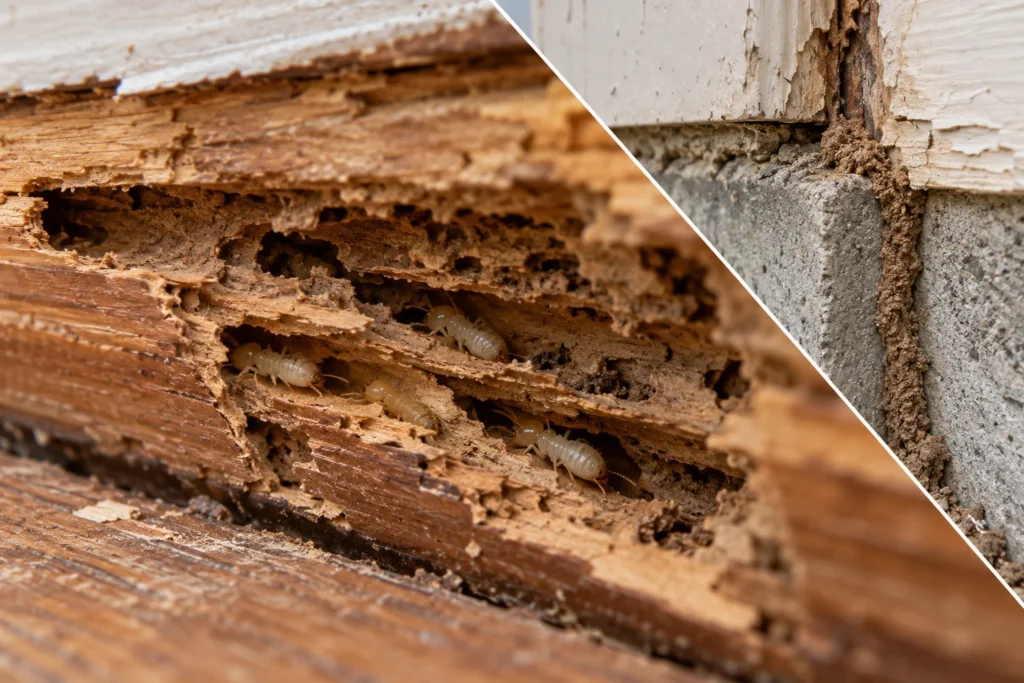
Termite damage signs can include mud tubes, timber that sounds hollow, thin or broken wood surfaces, discarded wings and unexplained changes around walls, floors or frames. Some clues indicate termite activity, while others resemble moisture damage or ordinary building movement. Leave suspected termite workings undisturbed and arrange a professional inspection to establish the cause, assess accessible areas and plan the next steps.
In a Melbourne property, the first clue might appear beside a door frame, underneath a house or during renovation work. The visible patch does not show how much concealed timber is affected. A small surface mark can need investigation, while a dramatic-looking stain may have a different explanation.
This guide explains what to look for, which signs are more specific and how to respond without disrupting useful evidence. Our termite inspection and treatment in Melbourne service connects those observations with an assessment and a management plan suited to the property.
Why Termite Damage Can Stay Hidden
Termites feed on cellulose, which is present in timber and other plant-based materials. Some damaging species work inside wood or travel through sheltered routes, allowing the outer surface to remain intact while material underneath is removed. Paint or a thin timber layer can conceal the change.
This explains why a skirting board may look ordinary until an edge breaks or nearby evidence becomes noticeable. The absence of visible insects does not establish that the building is clear. Wall linings, stored belongings and inaccessible spaces can hide both activity and damage.
Brickwork, concrete and steel framing also need to be considered in context. Termites do not eat concrete, but a building containing concrete can still have susceptible timber, fittings or concealed access routes. The construction type alone cannot confirm protection.
For a homeowner, the useful distinction is between noticing a warning sign and diagnosing the problem. You can record a change and arrange access. An inspector assesses the evidence, explains limitations and recommends any further investigation. Trying to expose the full extent yourself can disturb activity and damage building finishes.
Seven Termite Damage Signs Worth Investigating
The following clues have different meanings. Several appearing together can strengthen concern, but an inspection is still needed to determine the cause and the extent of any accessible damage.
| Sign | What you might notice | What it can tell you |
| Mud tubes or earthen workings | Narrow soil-like tracks on walls, piers or timber | Possible sheltered termite movement; leave them intact. |
| Hollow or fragile timber | An unusual sound or a thin surface that has already broken | Internal timber loss requiring assessment. |
| Rippled paint or wall finishes | Localised bubbling, distortion or sunken areas | A warning with several possible causes. |
| Small openings with soil-like material | Damaged edges or openings beside earthen deposits | Evidence worth showing to an inspector. |
| Changes in frames or flooring | A newly tight door, distorted timber or a soft floor area | Possible deterioration, movement or moisture problems. |
| Flying termites or shed wings | Winged insects or loose wings around openings | Termite activity nearby; structural infestation needs confirmation. |
| Pellet-like debris | Small deposits below timber or furniture | Possible drywood termite evidence or another source of debris. |
Mud tubes and earthen workings
Subterranean termites can construct covered routes using soil and other material. These shelter tubes may appear on foundation surfaces, support piers, brickwork or timber. They protect travelling termites and can connect sheltered feeding areas.
Record the location and photograph the tube without scraping it away. Its appearance alone does not establish whether termites are currently using it. An apparently empty section also cannot rule out activity elsewhere. Leave testing and interpretation to the inspector.
Hollow or unusually fragile timber
Internal feeding can leave wood weakened beneath a surface that still looks sound. You may notice this when an existing damaged edge gives way or an ordinary light contact produces an unusual sound.
A hollow sound is a clue with limitations: timber profiles and cavities can also affect the sound. Avoid forceful tapping, probing or breaking a board to test it. Tell the inspector which section changed and whether nearby timber appears affected.
Bubbling paint and distorted wall finishes
Rippled paint, localised blistering or a sunken patch can draw attention to a concealed problem. Termite activity is one possible explanation, but leaks, condensation and poor paint adhesion can create similar changes.
Note whether the mark is new, whether it is spreading and whether there are mud-like deposits or damaged timber nearby. Do not assume that repainting has resolved the cause. The underlying building condition needs to be understood first.
Small openings with earthen material
An opening beside soil-like material can be useful evidence, particularly when it occurs near other suspected termite workings. Damage may become visible where a surface has already broken during normal use or renovation.
Small holes alone are not a reliable diagnosis. Timber borers, old fixings and other causes can leave openings too. Photograph the whole area as well as the close detail, and leave surrounding material in place for assessment.
Changes in doors, windows and floors
A door that suddenly catches, distorted timber trim or an unexpectedly soft floor section deserves investigation. These symptoms can reflect timber deterioration, but seasonal moisture, building movement and installation problems are also possible.
Describe the timing and location rather than concluding that termites caused the change. If flooring feels unstable or a supporting component appears seriously damaged, keep people away from that area and seek building advice as well as a termite inspection.
Flying termites and discarded wings
Winged reproductive termites, also called alates, can leave loose wings after a flight. Finding them indoors or around a building should prompt identification and assessment. Winged ants can look similar at a glance.
The University of the Sunshine Coast’s explanation of termites and signs around homes describes these reproductive flights and potential warning signs. A swarm nearby does not establish the amount of damage inside your property.
Pellet-like debris and possible frass
Some drywood termites leave distinctive faecal pellets, often called frass, which can accumulate below affected timber. This differs from the earthen workings associated with subterranean termites. Not every termite problem produces visible pellet piles.
Loose material can also come from timber borers, ants or ordinary deterioration. Avoid labelling every dusty deposit as termite droppings. Record its position and appearance, and ask the inspector to identify it before choosing a response.
Where to Look Around Your Property
Start with accessible areas that you can view safely during ordinary property care. Inside, note changes around skirting boards, door jambs, window frames, flooring and built-in cupboards. Areas near plumbing deserve attention when there are leaks or persistent damp conditions.
Outdoors, visible building edges, accessible supports, decks, timber steps and attached structures can provide useful clues. Stored timber, garden materials or dense planting may hide surfaces that would otherwise be easy to inspect. Observe without dismantling structures or disturbing suspected workings.
For homes with a subfloor or roof void, arrange professional access rather than entering unfamiliar or confined spaces yourself. These locations can contain concealed timber and inspection obstacles. A safe visual check from an ordinary doorway is different from crawling underneath a house.
An apartment or commercial unit also needs its building context considered. The affected surface may be inside your tenancy while relevant access or structural timber sits in a shared area. Tell the property manager where the evidence appeared so inspection arrangements can be coordinated.
For example, a damaged skirting board beside a laundry should be reported with the room location, nearby plumbing concerns and photographs. Those details help the inspector plan the assessment; they do not establish the pest or treatment in advance.
Termite Damage Versus Water Damage and Timber Decay
Termite feeding, moisture damage and fungal decay can all weaken timber. They may occur together, which makes a single visual clue difficult to interpret. Damp conditions can deserve attention even when no termites are identified.
| Possible cause | Evidence that may be present | What needs checking |
| Termite feeding | Internal galleries, earthen workings or identifiable termites | Pest identification, accessible activity and affected timber. |
| Water damage | Staining, swelling, dampness or a connection to a leak | The moisture source and damage to surrounding materials. |
| Fungal timber decay | Softening, deterioration or characteristic cracking in damp wood | The decay, underlying moisture and structural implications. |
| Timber-boring insects | Exit holes or debris associated with affected wood | Insect identification and whether the attack is current. |
| Building movement or wear | Gaps, sticking components or changed alignment | Construction, maintenance and movement-related causes. |
Subterranean termite galleries can contain earthen material, while staining and swelling may suggest a moisture problem. These are clues to investigate, rather than a complete diagnosis from a photograph. Surface damage can hide more than one condition.
A practical response addresses both the pest question and the building question. An inspector may identify termite evidence, while a plumber investigates a leak or a building professional assesses weakened timber. Clarify which assessment each person is providing so an unresolved cause is not overlooked.
T
Termites or Ants and Why Identification Matters
Termites are sometimes called white ants, although they are different insects. Winged forms are especially easy to confuse when they gather near windows or lights. Identification matters because an ant treatment does not automatically address a termite problem.
Winged termites generally have a broad waist, relatively straight antennae and two pairs of similarly sized wings. Winged ants generally have a pinched waist, elbowed antennae and front wings larger than the rear pair. A clear photograph may help, but poor lighting or damaged specimens can obscure those features.
Describe where the insects appeared and whether you also found wings, earthen tracks or damaged timber. Avoid spraying them before seeking advice. If identification remains uncertain, report the observation as suspected termite activity and let the inspector establish what the evidence supports.
Is the Damage Old or Are Termites Still Active
Existing damage records what happened to timber; it does not automatically show what is happening today. Timber may remain hollow or weakened after an earlier infestation has been managed. Conversely, activity can continue in a concealed area without new obvious surface damage.
Live termites provide clear evidence of activity at the location where they are found. Other observations, such as new workings or changes recorded during monitoring, can help an inspector assess the situation. A single empty tube, an old report or the absence of insects during a brief look cannot establish that the whole property is clear.
Our termite detection and assessment service examines evidence and accessible conditions to help distinguish confirmed findings from questions needing further investigation.
Keep earlier inspection reports, treatment records and photographs available. A record stating that activity was treated several years ago is useful background, but it needs to be considered alongside current observations and property changes.
There are also two separate decisions to make: whether pest management is needed and whether affected timber requires repair. Previously treated damage can still need a building assessment. Clarify both issues before covering the area with new finishes.
What to Do When You Find Suspected Termite Damage
Leave the evidence as you found it and arrange an assessment promptly. Avoid turning a small discovery into a larger opening while trying to confirm the pest yourself. The inspector benefits from seeing the original workings and their relationship to surrounding surfaces.
- Photograph the location and visible evidence without touching it.
- Record the date, room or building area and any recent changes.
- Leave suspected tubes, damaged timber and live termites undisturbed.
- Avoid household sprays, scraping, sealing or removing affected material.
- Notify the relevant owner or property manager if access is shared.
- Contact a termite professional and describe exactly what you found.
If the evidence appeared during renovation, pause work around the suspected area until the next step is agreed. Tell the inspector what has already been opened, removed or sprayed. Accurate information helps them interpret what remains.
When an accidentally exposed area contains suspected live termites, avoid widening it and ask the provider how to protect it until the visit. Keep children and pets away from damaged surfaces or any unstable material.
For businesses, arrange access with the person responsible for the premises and explain whether work, deliveries or customers could affect the appointment. Where flooring or supporting timber appears unsafe, restrict access and obtain appropriate building advice. Pest identification alone does not establish structural safety.
What a Professional Termite Inspection Can Confirm
A termite inspection assesses accessible evidence of activity, visible damage and conditions that may support entry or feeding. The scope should explain which building areas and surrounding features are included, along with any access restrictions.
The inspector may examine accessible internal and external areas, roof spaces, subfloors and relevant timber structures. Detection equipment can support that examination when appropriate, but it does not remove every limitation created by concealed or inaccessible construction.
A thermal pattern, for example, needs interpretation alongside other findings. It should not be treated as a complete picture of every concealed termite or damaged component. Ask what the findings establish and whether another assessment is recommended.
The report should identify the evidence observed, accessible areas inspected, limitations and recommended next steps. Where the damage extends into concealed material, additional investigation may require a separately agreed scope and suitable access.
If you are buying a property, a pre-purchase pest inspection in Melbourne can help identify accessible timber-pest concerns before you proceed. Coordinate this with the building inspection because pest findings and structural condition answer different questions.
Prepare by providing previous records and making requested areas accessible. You do not need to strip finishes or clear every cupboard without instructions. Confirm access arrangements and ask how findings will be explained after the visit.
How Treatment and Structural Repairs Fit Together
The treatment decision follows identification, activity assessment, construction and access. The plan should explain what it is targeting and how progress will be checked. General pest treatment should not be assumed to provide a termite management system.
Baiting and monitoring
Termite baiting and monitoring systems can form part of an appropriate management plan. Monitoring helps assess termite activity, while suitable baits are used according to the selected system and findings.
These systems require servicing and assessment. Ask who checks the stations, what happens when termites are detected and how the response is recorded. An installed station is part of a continuing process rather than evidence that every termite risk has disappeared.
Soil treatments and reticulation systems
Chemical soil barriers involve applying an appropriate termiticide to suitable soil treatment zones. Building design, soil conditions and access influence the proposed work and its limitations.
Termite reticulation systems use installed pipework to distribute a suitable treatment when the system and site allow it. They have their own servicing requirements. Ask how an existing system is identified and assessed before assuming it can be replenished.
Repairs and follow-up
Pest treatment does not replace timber that has already lost strength. A building professional may need to assess affected components and recommend repairs. The repair sequence should be coordinated with the termite plan so evidence and treatment access are considered.
Request a written explanation of preparation, product precautions, treatment areas and follow-up. If a warranty is offered, check its actual coverage and conditions. Agree who arranges repairs, who monitors termite activity and when the property should be reviewed again.
How to Reduce the Risk of Further Termite Damage
Prevention focuses on property conditions and continued inspection. Repairing a moisture problem or improving access can support management, but these changes do not establish that an active infestation has been resolved.
- Repair plumbing leaks and investigate recurring dampness.
- Keep drainage working and address water pooling near the building.
- Maintain suitable ventilation and keep existing subfloor vents clear.
- Store loose timber and cellulose materials away from building edges.
- Keep soil, mulch and stored belongings from concealing inspection areas.
- Retain treatment records and follow the management system’s maintenance advice.
Check proposed garden, paving or building work with the relevant professional when it could affect a termite management system or inspection access. A change that makes the perimeter harder to inspect may need attention even when the building looks tidy.
For rentals and commercial premises, responsibilities need to be practical. The occupant may report a leak, while an owner or manager arranges the repair. Keep a record of recommendations and completed work so the next inspection has useful background.
Continue observing accessible surfaces between professional visits. If a new warning sign appears, report it promptly instead of waiting for the next routine appointment. Prevention works best when property maintenance and termite monitoring remain connected.
How Often Melbourne Properties Need Termite Inspections
Victorian building guidance recommends professional termite inspections every 12 months, particularly in higher-hazard areas. The appropriate arrangement for an individual property also needs to account for inspection findings, construction, access and any existing management system.
Our annual termite inspections in Melbourne provide a service option for reviewing accessible areas and discussing changes since the previous visit. Ask whether your circumstances call for additional checks or a different monitoring schedule.
Scheduled servicing of a baiting system and a broader building inspection have different purposes. Confirm which service is included, which areas are examined and how the results are documented.
New suspected activity should be assessed when it appears. An earlier inspection cannot rule out later changes, and a reassuring report should be read alongside its date and access limitations. Keep reports together so patterns, repairs and outstanding recommendations can be reviewed.
Frequently Asked Questions
What are the first termite damage signs to look for
Mud tubes, weakened timber, discarded wings and unexplained surface changes can prompt concern. The first visible clue depends on the property and termite type. Some signs have other causes, so record the evidence and arrange an inspection rather than diagnosing the damage yourself.
What does termite damage look like in wood
Affected timber may contain internal galleries beneath a thin surface. Subterranean termite damage can include earthen material within those spaces. Similar deterioration can have other causes. An inspector needs to consider the timber, surrounding evidence and accessible building conditions.
Can termites damage a house without visible signs
Yes. Activity and feeding can remain concealed inside timber, wall cavities or inaccessible areas. An apparently ordinary surface does not establish that the building is clear. Professional inspections help assess accessible evidence and identify limitations or areas needing further investigation.
Does a hollow sound mean I definitely have termites
No. A hollow sound may reflect internal timber loss, but the timber profile, a cavity or another cause can affect the sound. Do not probe or break the surface to test it. Show the inspector the location and explain what changed.
Are bubbling paint and tight doors reliable termite signs
They are warning signs with several possible explanations. Moisture, building movement and maintenance problems can produce similar symptoms. Their significance increases when there is supporting pest evidence, but an inspection is needed to establish the cause and recommend the appropriate response.
Do discarded wings mean my house is infested
Wings can indicate a reproductive termite flight, although winged ants need to be ruled out. Nearby termite activity does not by itself confirm an infestation inside the building or establish damage severity. Photograph the evidence and arrange identification and assessment.
Do all termites leave visible droppings
No. Distinct pellet deposits are associated with some termite types, especially drywood termites. Subterranean termites are more often investigated through earthen workings and other evidence. Loose dust or debris needs identification because timber borers and ordinary deterioration can leave material too.
Should I spray termites when I find them
Leave suspected activity undisturbed and contact a termite professional. Household spraying may disrupt evidence without addressing concealed activity or the wider problem. If you have already applied a product, tell the inspector what it was and where you used it.
Can old termite damage still need repairs
Yes. Timber may remain weakened after activity has been managed. A current termite assessment addresses pest evidence, while a suitable building professional assesses damaged components and repair needs. Keep previous treatment records available and coordinate repairs with the management plan.
Can I judge the amount of damage from one visible patch
No. A surface patch cannot establish the condition of all concealed timber. The inspection report should explain accessible findings, limitations and whether additional investigation is recommended. Keep people away from any unstable area while appropriate assessments are arranged.
Arrange a Termite Assessment in Melbourne
Total Care Pest Control provides termite inspection, assessment and treatment services for Melbourne homes and businesses. Based in Greenvale, Victoria 3059, our team can discuss the evidence you have found and the appropriate next step for your property.
When you contact us, explain where the sign appeared, whether renovation work exposed it and whether previous treatment records are available. Ask about inspection scope, access, reporting and follow-up so you understand what the appointment includes.
Call 0480 210 636 or email accounts@totalcarepest.com.au to discuss suspected termite damage. Leave the evidence undisturbed and arrange an assessment before repairing or covering the affected area.