How does pest control work? Professional pest control starts with inspecting a property, identifying the pest and finding why it is there. The technician then selects suitable controls, explains preparation and safety requirements, carries out treatment and checks the results. Prevention and follow-up help reduce the chance of the same problem returning.
In Melbourne, the right approach depends on the building and how people use it. A shared kitchen, a house with a roof void and a busy food business have different access, cleaning and monitoring needs. Even two properties with the same pest can need different treatment plans.
Understanding the process helps you prepare, compare quotes and recognise whether the service is addressing the source of the activity. Our guide to what pest control includes explains the broader subject. Here, we focus on what happens at an appointment, how treatments work and what to expect afterwards.
What Happens Before Your First Appointment?
Your first conversation helps the technician understand the problem and arrange the right service. Describe what you have seen, where it happens and when it started. Mention any previous treatments, recurring activity or changes such as building work, a leak or newly introduced furniture.
A photograph can be useful when it is safe to take one. However, a description or image may not establish the species, extent of activity or source. An on-site inspection may still be needed before the treatment scope can be confirmed.
Explain whether the property is a home, rental, apartment, shop or other business. Shared buildings can require access to common areas or coordination with a property manager. Commercial sites may need the appointment arranged around deliveries, food handling or customer hours.
Also mention children, pets, aquariums and any circumstances that could affect preparation or treatment choices. Request instructions before the visit, including which spaces need access and whether occupants will need to leave any areas.
Ask what the booking includes: inspection, treatment, reporting, follow-up and any written warranty. This gives you a clear starting point for comparing services.
The Pest Control Process: Six Stages
A professional service usually follows the same decision sequence, although the work at each stage changes with the pest. Some problems can be addressed during one appointment. Others require investigation, several treatments or ongoing monitoring.
|
Stage |
Main purpose |
What you should understand |
|
Inspect |
Locate evidence and contributing conditions. |
Which areas were checked and what access was limited. |
|
Identify |
Establish the pest and assess the activity. |
What is confirmed and what needs further investigation. |
|
Plan |
Choose suitable controls and priorities. |
Scope, preparation, precautions and expected follow-up. |
|
Treat |
Apply or install the selected controls. |
Where work occurred and which instructions apply. |
|
Monitor |
Check activity and treatment response. |
How progress will be assessed. |
|
Prevent |
Reduce food, water, shelter and access. |
Which practical changes can reduce recurrence. |
Stage 1: Inspect the property
Inspection looks beyond the place where a pest was last seen. Depending on the problem, the technician may examine accessible cupboards, appliances, storage areas, roof voids, subfloors and outdoor spaces. Signs can include droppings, damaged packaging, shed skins, tracks or live insects.
Building conditions matter too. Leaks, gaps, clutter and available food can explain recurring activity. An inspection also has limits: concealed or inaccessible areas may remain unexamined. A useful report makes those limitations clear so you understand what the findings cover.
Stage 2: Identify the pest and assess the problem
Correct identification changes the treatment decision. Different insects can look similar while feeding, nesting and reproducing in different ways. The technician considers the evidence, likely species, affected areas and conditions supporting the activity.
The assessment also considers how the space is used. Pest evidence beside food preparation requires a different response from occasional activity in an outdoor storage area. Where evidence is inconclusive, monitoring or another inspection can be more useful than choosing a product before the pest is identified.
Stage 3: Agree on a treatment plan
The plan connects the findings with specific actions. It should explain the target pest, treatment areas, proposed methods, preparation and any necessary return visits. You should also know whether cleaning, repairs or proofing require separate arrangements.
For example, a kitchen problem might involve targeted baiting, removing food residues and monitoring hidden areas. A rodent problem might involve traps or bait stations alongside access management. These are illustrative approaches; the inspection determines which combination is suitable for your property.
Stage 4: Carry out targeted control
Treatment follows the plan and the requirements of the selected products or equipment. Placement matters: a control needs to reach the pest’s relevant feeding, movement or harbourage areas while accounting for occupants and the surroundings.
Some services involve small, targeted applications. Others require work across several accessible areas. The technician should explain what was done, which precautions apply and what you should avoid disturbing. The amount of visible spray is not a reliable measure of how well a service has been planned.
Stage 5: Monitor and reassess
Monitoring helps determine whether activity is declining and whether further work is needed. Depending on the pest, this can involve checking traps, bait consumption, monitoring devices or fresh evidence during a return inspection.
Your observations can help when they include dates, locations and photographs. Persistent activity may indicate untreated areas, continuing entry or conditions that still support the pest. Reassessment uses that evidence to adjust the plan; it should not rely only on repeating the initial treatment.
Stage 6: Reduce the chance of recurrence
Prevention deals with conditions that treatment alone cannot permanently remove. The recommendations may include food storage, waste handling, moisture repairs, clutter reduction or suitable proofing.
Responsibility should be clear. The technician may identify a gap or leak, while a property owner or relevant trade carries out the repair. Agree on priorities and retain the service report. This helps you distinguish completed pest-control work from maintenance that still needs attention.
How Integrated Pest Management Guides Decisions
Integrated pest management, usually shortened to IPM, combines inspection, identification, prevention, suitable controls and monitoring. It is a way of deciding what to do based on evidence, rather than selecting the same treatment for every situation.
An IPM plan considers whether the observed activity requires action, what is causing it and which methods are likely to work in that setting. The acceptable level of activity depends on the pest and the site. A food business, for example, has different concerns from an outdoor garden area.
Imagine mice repeatedly appearing in a storeroom. A control may reduce the animals currently present, but open food supplies and an accessible doorway can keep the problem going. An effective plan considers the control method, storage arrangements and entry route together.
IPM can include pesticides when they are appropriate. It can also include physical measures, sanitation and changes to site management. The important point is that each action has a reason, and the results are checked.
For Melbourne households and businesses, this approach creates a practical connection between the technician’s work and everyday property care. It also makes follow-up more useful because progress can be compared with the original findings.
How Pest Control Treatments Work
Treatment methods act in different ways. The technician chooses them according to the pest, its behaviour, the affected location and the conditions on site. A combination may be needed when one method cannot address the whole problem.
|
Method |
How it works or contributes |
Important consideration |
|
Baits |
Encourage target pests to consume a bait containing an active ingredient. |
Placement, competing food and servicing affect performance. |
|
Residual treatments |
Leave a treatment on selected surfaces where target pests may contact it. |
Suitable surfaces, product directions and aftercare matter. |
|
Dust or foam applications |
Deliver a selected product into suitable cracks, voids or other treatment areas. |
Access, product suitability and precise application are important. |
|
Traps and monitors |
Capture pests or reveal where activity is occurring. |
Device choice, location and regular checks affect usefulness. |
|
Physical exclusion |
Restricts access through suitable proofing or repairs. |
The correct material and installation depend on the building and pest. |
|
Heat or steam |
Uses controlled heat in suitable specialist treatments. |
Coverage, temperature and item suitability require assessment. |
|
Sanitation and habitat changes |
Reduce food, water, shelter or breeding conditions. |
These measures need ongoing attention. |
Pesticide baits usually combine an attractant with an active ingredient that acts after the pest feeds. A bait needs to suit the target pest and be placed where it is likely to feed. Alternative food, unsuitable placement or interference from other products can affect the response.
For example, cockroach control in Melbourne may involve targeted baiting alongside inspection, cleaning advice and monitoring. Treating visible insects alone can leave the conditions behind appliances or in nearby harbourages unresolved.
Residual products, dusts and foams have different application requirements. Their active ingredients act when pests encounter the treatment as intended. They should be used in appropriate locations according to their directions. A product suitable for one area is not automatically suitable for another.
Traps capture pests; monitoring devices help locate activity and measure changes over time. Their purpose should be clear in your plan, along with who checks them and what the findings will trigger. Physical exclusion addresses suitable entry routes with measures chosen for the building and pest.
Specialist options, including heat, steam or biological controls in certain settings, have their own limitations. Confirm availability and suitability with the provider. The treatment explanation should tell you why the selected method fits your pest and property, and how its performance will be checked.
Why Different Pests Need Different Plans
Ants and cockroaches
Ant trails provide clues about movement and food sources, but the point where ants enter a room may not reveal the full source of activity. Species, feeding behaviour and nesting conditions influence the choice of control.
Cockroach work often focuses on accessible hiding places, food residues and moisture. Kitchens, appliances and storage areas can require careful inspection and targeted treatment. Monitoring helps distinguish occasional sightings from continuing activity in concealed areas.
Rats and mice
Rodent management considers feeding areas, shelter and access routes. A rat in a roof void and mice around food storage may need different device placement and follow-up arrangements.
Our rodent control in Melbourne service explains this pest-specific approach. Proofing should be coordinated with the management plan so that access changes and control work support each other. Removing accessible food and checking activity remain important after the first visit.
Termites
Termite management requires its own inspection and treatment decisions. Building construction, access, evidence of activity and existing management systems all influence the options.
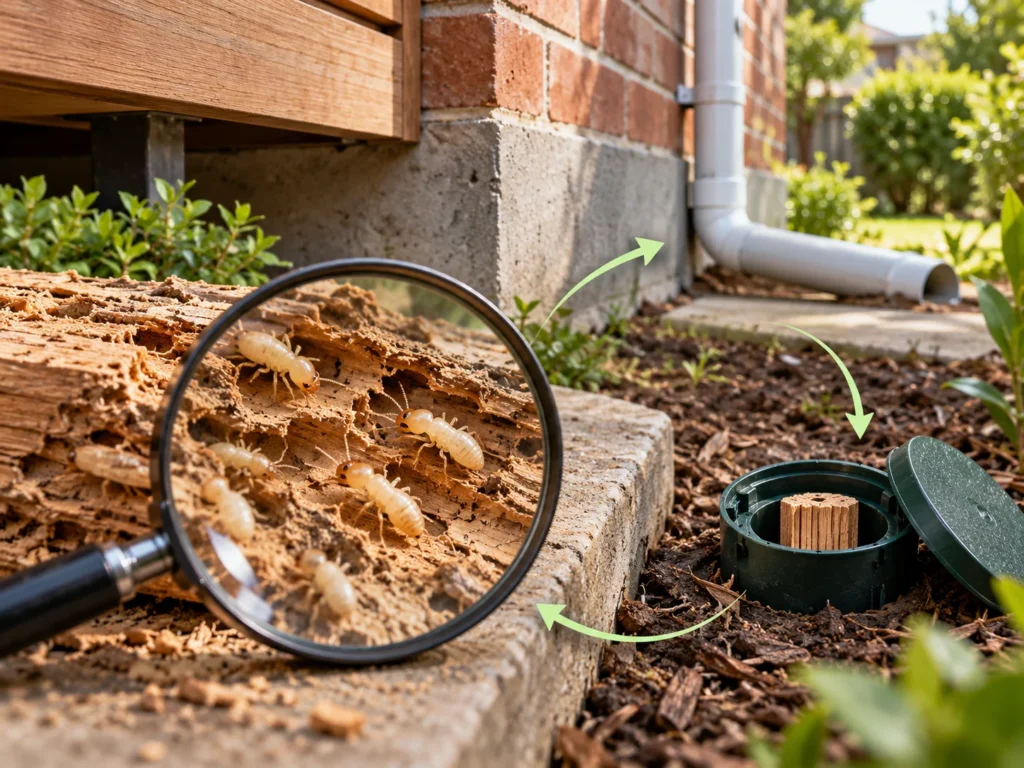
Possible approaches include suitable baiting or soil treatment systems. A reticulation system distributes an appropriate treatment through installed pipework when the system and site conditions allow it. These methods are not interchangeable, and a general insect treatment does not establish termite protection.
Leave suspected termite workings undisturbed and arrange an assessment. Pest treatment and repairs to structural damage are separate matters; ask what the inspection and proposed work actually cover.
Bed bugs, fleas and other pests
Bed bug work depends on identifying evidence, examining likely harbourages and coordinating treatment with preparation and follow-up. Bite marks alone do not establish which pest is present.
Flea management may require attention to premises conditions and suitable pet-care advice. Pantry insect problems can require finding affected food supplies, while spider management may consider access and surrounding harbourage.
The shared principle is straightforward: the plan follows the pest’s biology and the evidence on site. Similar-looking symptoms do not always call for the same treatment.
What to Do Before Pest Control
Preparation improves access and helps the work proceed as planned. Follow the instructions for your booked service; clearing every cupboard or moving all furniture is not necessary for every treatment.
- Describe the affected rooms and make the requested areas accessible.
- Store or protect food and food-contact items as instructed.
- Tell the technician about pets, aquariums, children and relevant sensitivities.
- Arrange access to required outdoor areas, roof spaces or shared locations.
- Keep any previous treatment records or useful photographs available.
- Confirm arrangements for occupants, keys and any return visit before treatment begins.
For a bed bug control service, preparation may involve specific instructions for bedding, clothing and affected belongings. Follow the supplied checklist before relocating items between rooms or properties. Moving belongings without a plan can complicate inspection and management.
If you are a tenant or manage shared premises, coordinate access and agreed property work with the relevant owner or manager. At a business, inform the people responsible for cleaning, deliveries and opening hours about the service arrangements.
Ask for clarification if an instruction is unclear. Preparation should match the treatment rather than rely on general advice from a different pest-control job.
Safety, Re-entry, Children and Pets
Safety requirements depend on the product, application method, treatment area and people or animals using the property. There is no single re-entry time or preparation rule that applies to every service.
Discuss your household or workplace circumstances before treatment. The technician should explain any restrictions, how long they apply and which areas are affected. Follow the product-related instructions and the specific aftercare advice provided for your appointment.
Ask how food, utensils, pet items and other sensitive belongings should be managed. Baits, traps and treated locations may have different requirements. Children and animals should not be able to interfere with installed controls.
Check that the operator holds the appropriate current licence for the proposed work and ask about insurance. Victoria’s guidance on using pest control services explains the importance of choosing a licensed provider and discussing products and precautions.
Descriptions such as “natural” or “eco-friendly” do not replace instructions for actual use. Request a clear explanation of the selected approach, including preparation, exposure precautions and re-entry. If the planned treatment creates an access problem for your household or business, discuss that before the appointment so suitable arrangements can be considered.
How Long Treatment Takes and When Results Appear
Appointment length and treatment response are different things. Inspection and application may be completed during a visit, while the resulting change in pest activity can take longer to assess.
The time on site depends on property size, access, the pest and the work included. A targeted service in one area differs from a detailed inspection or a job requiring several devices and treatment locations. Ask for an estimate based on your booking.
Results also depend on the method. Some controls rely on pests finding bait or entering a trap. Hidden harbourages, continued entry or developing life stages may affect when activity declines and whether follow-up is needed.
The technician should explain the expected pattern for the chosen service and when to report continuing activity. Seeing pests afterwards does not, by itself, prove that treatment has failed. Increased sightings do not automatically prove success either.
Record where and when you see fresh evidence. A pattern of observations gives the provider more useful information than a general impression, especially when deciding whether to inspect again or adjust the plan.
What Happens After Treatment
Aftercare protects the intended treatment and helps the provider assess progress. Keep the service information and follow the instructions for cleaning, access and installed equipment.
- Avoid cleaning or disturbing treatment locations until instructed.
- Leave bait stations and monitoring devices in their agreed positions.
- Record fresh sightings or evidence with dates and locations.
- Complete the recommended food, waste, moisture and storage improvements.
- Arrange agreed proofing, maintenance or follow-up work.
A useful service report identifies the target pest, accessible areas inspected, treatment carried out, relevant precautions and recommendations. Ask when the next check is needed and what activity should prompt earlier contact.
Termite management has separate monitoring and inspection requirements. If you need termite inspection and treatment in Melbourne, request a property-specific explanation of the findings, management options and future inspection arrangements.
When a problem continues, revisit the evidence and contributing conditions. Unresolved access, missed harbourages or changes at the property can affect results. A follow-up should help establish what is happening and what needs to change.
How Often Pest Control Is Needed and What It Costs
Service frequency depends on the pest, activity level, property conditions and purpose of the program. An isolated problem can need a different schedule from recurring activity or ongoing business monitoring.
Termite inspections, an active bed bug treatment program and routine general pest services address different needs. Ask why a proposed interval suits your situation and whether it may change after the results are reviewed.
Cost depends on the scope. Relevant factors include the pest, property size, accessible treatment areas, severity, preparation, selected methods and the number of included visits. Specialist investigation or proofing can be quoted separately.
Compare written quotes on the same basis. Check what is inspected, what is treated, whether a report is included and how follow-up is handled. A lower headline price may cover fewer areas or visits, while a higher price should have a clear explanation of its scope.
If a warranty is offered, read its terms. Ask which pest and areas it covers, its duration, any maintenance conditions and the process for requesting another visit. Treatment coverage should not be assumed to include repairing existing damage.
When DIY Is Useful and When to Call a Professional
Everyday prevention can make a meaningful difference. Keeping food sealed, removing accessible waste, addressing moisture and maintaining suitable building access controls can reduce conditions that support pests.
For a small, clearly identified problem, a suitable consumer product may be an option when its instructions can be followed. Its usefulness depends on the pest and setting. Applying several products without a plan can interfere with assessment or with another control method.
Professional help becomes valuable when the pest is uncertain, activity keeps returning, affected areas are concealed or the problem extends across several rooms. Suspected termites, difficult bed bug activity and ongoing rodent problems benefit from a pest-specific assessment.
Businesses and shared properties can also need documented findings, coordinated access and scheduled monitoring. Those requirements go beyond dealing with a single visible pest.
Explain any DIY actions to the technician, including the product and treatment locations. This helps them interpret the evidence and select the next step. Accurate information is more useful than repeatedly treating the same symptom without understanding its source.
Frequently Asked Questions
How does pest control work in a Melbourne home?
The technician inspects accessible areas, identifies the pest and assesses the conditions supporting it. They then explain a suitable plan, carry out the agreed controls and provide aftercare advice. Monitoring, follow-up and property improvements depend on the pest and the findings.
Do I have to leave the house during pest control?
That depends on the treatment. Some work has specific exclusion or re-entry requirements, while other services affect only selected areas. Confirm the arrangements before the visit and follow the instructions for the actual products and methods used.
Is pest control safe around children and pets?
Children and pets need to be considered in the plan. Tell the provider about them before treatment and ask about preparation, restricted areas and installed devices. Safety depends on suitable method selection and following the relevant instructions; a general marketing statement is insufficient.
How long does pest control take to work?
There is no universal timeframe. The pest, control method, infestation extent and property conditions affect the response. Ask when improvement is expected, how it will be checked and when continuing activity should be reported.
Will one treatment solve the problem?
Some problems may be resolved with one service and appropriate prevention. Others need repeat treatment, servicing or monitoring. The provider should explain the expected program and which additional visits are included rather than promise one visit for every pest.
Why might I still see pests after treatment?
Activity can continue while a control takes effect or because hidden areas, developing life stages or entry routes remain relevant. Record fresh evidence and contact the provider according to the agreed guidance. Sightings need assessment in the context of the treatment.
Does pest control always involve fumigation?
No. Pest control can involve inspection, baiting, trapping, targeted applications, proofing and monitoring. Fumigation is a specific specialist method. Ask which method is proposed for your job instead of assuming all pest treatments work in the same way.
Can pest control work without spraying?
Yes, some plans use traps, baits, physical exclusion or environmental changes. A bait may still contain a pesticide even though it is not sprayed. The appropriate combination depends on identification, evidence, access and the pest’s behaviour.
How often should I arrange pest control?
Use the inspection findings and purpose of the service to decide. Recurring infestations, commercial monitoring and termite inspection arrangements can require different schedules. Request a reason for the proposed frequency and review it as conditions change.
What should I ask before booking?
Ask about the inspection, target pest, treatment areas, preparation, precautions, reporting, follow-up and total scope of the quote. Also confirm the operator’s appropriate licence and insurance. These details help you compare services and understand your responsibilities afterwards.
Arrange a Clear Pest Control Plan in Melbourne
Total Care Pest Control provides pest inspections, treatments and prevention advice for Melbourne homes and businesses. Based in Greenvale, Victoria 3059, our team helps customers understand the activity identified and the work recommended for their property.
When you contact us, describe the pest or evidence, affected areas and any previous treatment. Our licensed and insured technicians can discuss the next step and explain the proposed service, preparation and follow-up requirements. Ask us about the scope of work and any property changes recommended alongside treatment.
For help with a pest problem, call 0480 210 636 or email accounts@totalcarepest.com.au. A clear plan connects inspection, appropriate treatment, follow-up and practical prevention so you know what happens next.